Quick Summary & Key Takeaways
- Emotional Resonance: The best colors for social media graphics balance psychological triggers with high digital accessibility.
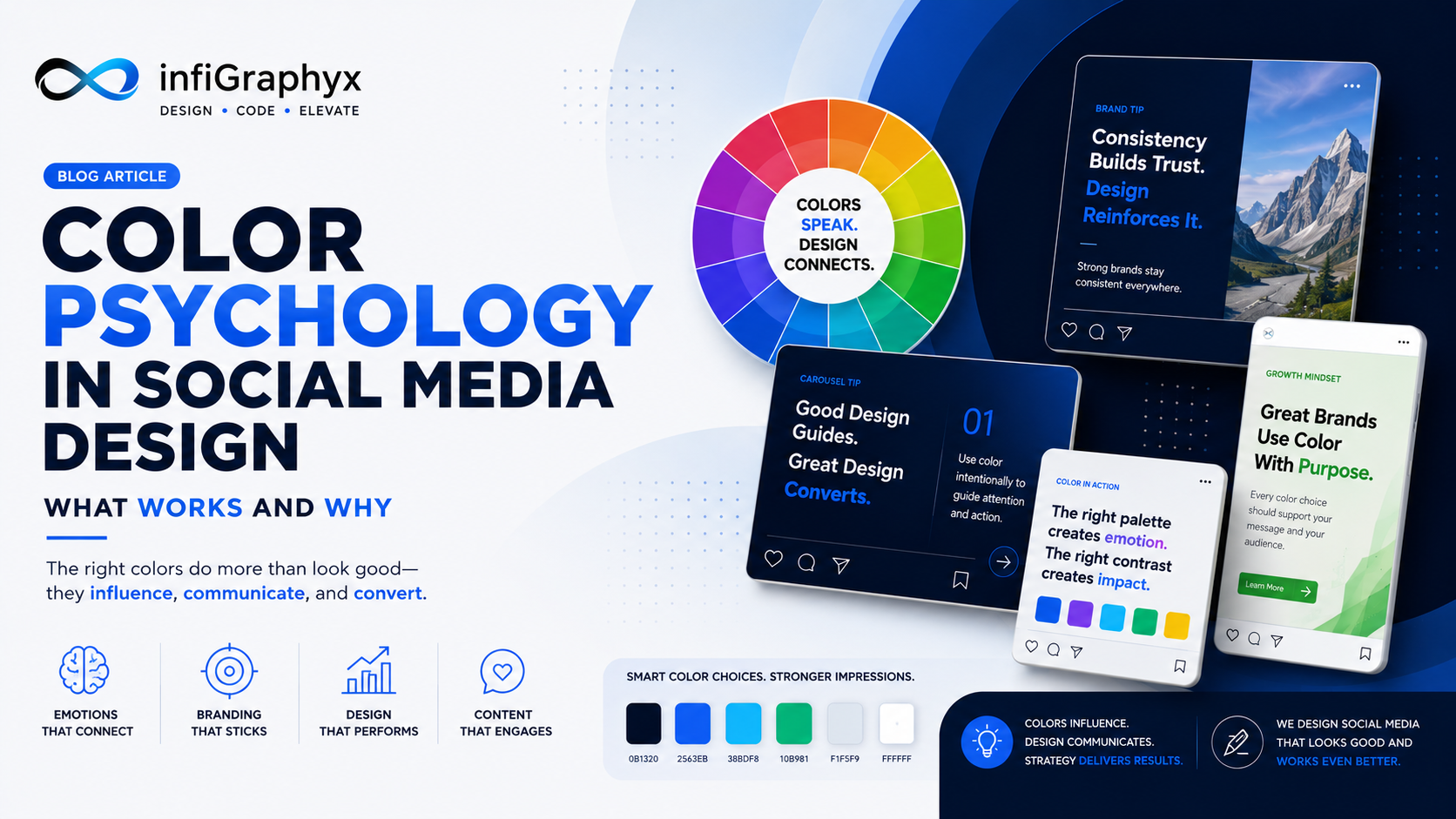
- The 60-30-10 Rule: Professional brand palettes consist of 60% neutral backgrounds, 30% primary brand colors, and 10% high-contrast accent colors reserved strictly for CTAs.
- Accessibility First: Web Content Accessibility Guidelines (WCAG) contrast ratios dictate that readability must always supersede aesthetic trends.
- Platform Consistency: Utilizing the exact same HEX codes across all platforms builds subconscious customer trust and establishes a premium visual identity.
What Is Color Psychology in Social Media Design?
Color psychology in social media design is the strategic, data-backed application of specific color palettes to influence audience perception, evoke targeted emotional responses, and subconsciously guide user behavior. In the realm of content marketing, color is not merely a stylistic choice; it is a functional tool used to establish topical authority, improve information retention, and drive conversion rate optimization.
Why Are Brand Colors Critical for Business Growth?
Color is the fastest communicative element in any marketing asset. Research indicates that consumers make subconscious judgments about a product or brand within 90 seconds of initial viewing, and up to 90% of that assessment is based on color alone. If your visuals lack consistency, you actively dilute brand awareness. Utilizing standardized color systems builds customer trust, positioning businesses as established industry leaders.
The InfiGraphyx Contrast & Conversion Matrix
To maximize audience engagement, the proprietary InfiGraphyx Contrast & Conversion Matrix dictates a strict application of color hierarchy:
- The Anchor (Backgrounds): Utilizing deep darks (Charcoal, Navy) or stark lights (Off-White, Pearl) to create an immediate canvas of high contrast.
- The Identity (Primary Colors): The core brand color used for structural elements, borders, and secondary text, establishing thematic consistency.
- The Trigger (Accent Colors): A highly vibrant, complementary color (e.g., Electric Blue, Safety Orange) deployed exclusively for actionable items like buttons and key data points.
Decoding Core Color Associations in Digital Marketing
While cultural contexts vary, certain semantic color patterns dominate global B2B and B2C marketing:
- Blue: Communicates stability, security, corporate trust, and clarity. Ubiquitous in finance, SaaS, and healthcare.
- Green: Signals financial growth, eco-consciousness, balance, and wellness.
- Red/Orange: Generates urgency, high kinetic energy, and immediate action. Highly effective for limited-time offers.
- Yellow: Evokes optimism and youthful energy. Functions exceptionally well as an attention-grabbing accent against dark neutrals.
- Minimalist Neutrals (Black, White, Beige): Establishes a premium, editorial, or luxury aesthetic, particularly when paired with meticulous typography.
Best Practices for Selecting and Applying Brand Colors
1. Implement the 60-30-10 Proportion Rule
Visual fatigue occurs when too many vibrant colors compete for attention. Use dominant neutrals for 60% of the graphic, your primary brand color for 30%, and reserve a high-contrast action color for the remaining 10%. This ratio is a staple in professional social media design.
2. Optimize for Both Dark Mode and Light Mode UIs
With over half of digital consumers utilizing dark mode on their devices, your color system must retain legibility across both UI states. Validate your palettes to ensure dark text remains highly readable on deep backgrounds.
3. Prioritize WCAG Accessibility Standards
High contrast isn't just an aesthetic preference; it is an algorithmic requirement. Utilizing digital contrast checkers ensures your graphics are accessible to visually impaired users, inherently improving scannability.
Expert Insight
Conversion rate optimization studies empirically demonstrate that isolating a single, high-contrast color specifically for calls-to-action (CTAs) trains the user's brain to recognize exactly where to click, significantly reducing interaction friction and boosting overall conversion volume.
Common Mistakes in Color Selection
- Vibrancy Overload: Utilizing multiple neon accents creates visual chaos, competing against the primary message and plummeting conversion rates.
- Neglecting Typographic Hierarchy: Relying solely on color to denote importance rather than using structural size and weight.
- Platform Inconsistency: Using different palettes on LinkedIn versus Instagram fragments your visual identity.
Elevate Your Brand's Visual Identity
Stop guessing with random online color generators. Professional branding requires highly scalable social media design systems optimized for specific market demographics. To upgrade your brand's digital presence and command higher market authority, request a consultation with InfiGraphyx today.
infiGraphyx Team
The infiGraphyx team consists of talented designers and creative professionals passionate about helping brands succeed through stunning visual content.